
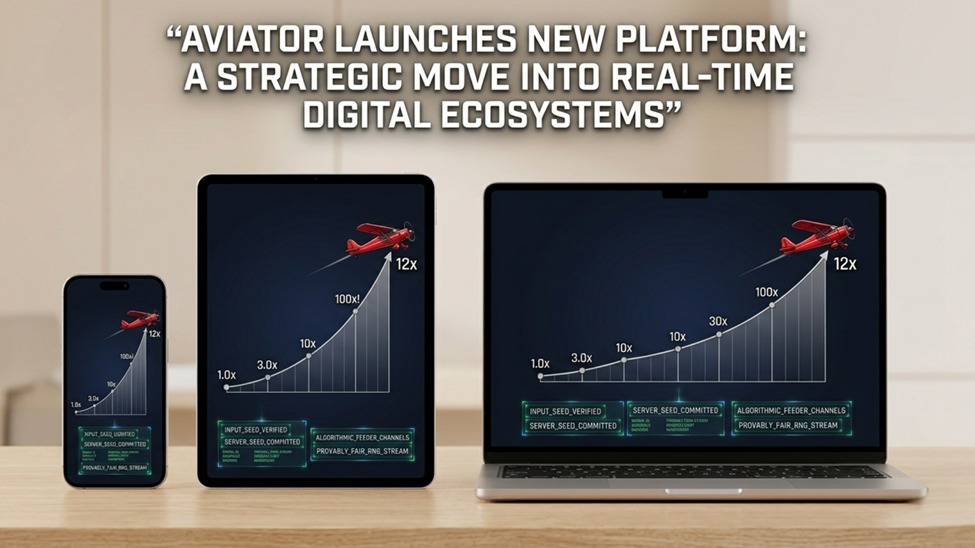
In a landscape where digital platforms are constantly competing for user attention, Aviator — developed by Spribe — has made a deliberate and well-timed move. The platform has officially expanded its digital ecosystem with a full-scale launch of a refined, data-rich, real-time interactive environment that goes well beyond what most would expect from a multiplier-based digital platform. Available globally and supported by over 50 million active users, this is not a product update — it is a structural evolution in how real-time digital engagement is designed, delivered, and trusted.
Aviator’s platform launch signals a clear strategic ambition: to anchor itself firmly within the global conversation around real-time digital ecosystems — platforms where transparency, speed, community, and data integrity are non-negotiable.
From a Single Product to a Full Ecosystem
What makes this launch strategically significant is not just what has been built — it is the philosophy behind how it was built. Aviator has moved away from treating its platform as a standalone product. Instead, it has structured itself as a living, breathing digital ecosystem with multiple interconnected layers: real-time data delivery, cryptographic verification, social multiplayer infrastructure, cross-device accessibility, and community-led content experiences.
Each component speaks to the other. The platform’s provably fair system — which uses SHA-256 cryptographic hashing to verify every round outcome independently — is not just a technical feature. It is a trust infrastructure. In a digital world where user skepticism is at an all-time high, Aviator has responded by making transparency a core pillar of its product design rather than an afterthought.
The platform’s real-time multiplier mechanism — where a rising curve can reach unpredictable heights before resetting — is the heartbeat of the product. But what surrounds that mechanic is what defines its ecosystem status: live leaderboards, in-session community chat, dual-interaction options, auto-execution features, and statistical dashboards that pull from over 50,000 verified data rounds.
The Architecture of Real-Time Trust
One of the most telling indicators of Aviator’s strategic positioning is its commitment to what it calls provably fair technology. In practical terms, this means that every interaction on the platform is cryptographically sealed and verifiable. Users can independently audit round outcomes using publicly available SHA-256 tools — no third party required, no trust assumed.
This is a significant departure from the black-box approach that defines many digital platforms today. At a time when regulators, consumers, and advocacy groups are demanding greater algorithmic accountability, Aviator is building its brand on the premise that openness is not a vulnerability — it is a competitive advantage.
The platform maintains a stated Return to Player (RTP) of 97%, one of the highest in its category. Independent analysis of over 50,000 rounds has confirmed that the platform’s actual performance aligns closely with this stated figure — a rare example of a digital product living up to its own mathematical claims. For a platform that processes tens of millions of sessions, this level of consistency reflects sophisticated backend engineering and an unwavering operational discipline.
Spribe, the company behind Aviator, has built its reputation on innovative approaches to digital product design — specifically in formats that combine brevity with intensity. Aviator’s round structure, which completes in under three seconds on average, is a direct response to modern attention patterns. The product is designed for users who demand immediate feedback loops, real data, and no unnecessary friction.
Community as Infrastructure
What separates Aviator from other real-time platforms is the depth of its social layer. Most digital products treat community as a feature — something bolted on after the core product is functional. Aviator treats community as infrastructure. From the moment a session begins, users are surrounded by live social data: other users’ active interactions, a real-time community chat, and a dynamic leaderboard that tracks top performers across daily, monthly, and all-time windows.
This approach creates what behavioral researchers sometimes call social proof at scale — the phenomenon where users are more engaged, more informed, and more committed when they can observe peer behavior in real time. By making the activity of others visible and meaningful, Aviator has engineered a community dynamic that enriches the individual experience without requiring any additional effort from the user.
User reviews highlight this as one of the platform’s most distinctive qualities. One verified user summarized it: the community aspect of the platform is unlike anything else — watching others participate in real time, engaging in live conversation, and sharing in those high-multiplier moments creates a genuine sense of collective experience. This kind of organic community formation is typically very difficult to engineer. For Aviator, it appears to be a natural output of thoughtful product design.
The platform also supports in-depth statistical transparency through its live analytics dashboard — offering users crash distribution data, probability curves, and historical performance metrics. This is not just about engagement; it is about empowering users to make informed decisions rather than operating in the dark.
Cross-Device Reach and Global Scalability
Scale is a meaningful metric only when it comes with consistency. Aviator’s platform has been built to deliver an identical experience across desktop, tablet, and mobile environments — with specific optimizations for low-bandwidth conditions. This makes the platform genuinely global rather than performatively so.
With support for multiple currencies and languages, Aviator is accessible to users across diverse markets. The platform operates through hundreds of licensed distribution partners worldwide, all subject to regulatory oversight by recognized authorities including the UK Gambling Commission — a credential that carries considerable weight in terms of platform integrity and user protection standards.
The responsiveness of the platform across devices reflects a strategic understanding that the future of digital interaction is mobile-first. A user moving between a desktop at home and a phone while commuting should experience zero degradation in quality, speed, or access to features. Aviator’s architecture has made that expectation a reality.
The platform’s user base — now exceeding 50 million active participants — is a testament to global demand for what Aviator offers. Growth at this scale does not happen passively; it is a product of sustained trust, consistent performance, and a platform that keeps evolving to meet user expectations.
Responsible Engagement: A Strategic Priority, Not a Compliance Exercise
One of the more telling signs of Aviator’s long-term platform thinking is how seriously it treats responsible engagement. The platform does not treat user protection as a legal checkbox. It actively weaves guidance into the product experience — from session budgeting recommendations embedded into the interface, to explicit warnings about high-risk strategies, to a dedicated responsible engagement resource center.
The platform’s own analytical materials are notably candid about risk: the crash distribution data is published openly, including the fact that approximately 10% of rounds resolve below the 1.04x threshold. Rather than obscuring unfavorable statistics, Aviator presents them as part of an honest, data-informed user experience. This kind of editorial honesty — rare in digital product design — builds the kind of sustained user trust that no marketing campaign can manufacture.
Aviator has also partnered with leading responsible engagement organizations including GamCare, BeGambleAware, and Gambling Therapy — giving users direct access to professional support resources. This inclusion speaks to a platform culture that prioritizes long-term user wellbeing over short-term engagement metrics.
At a product level, responsible engagement is supported through the auto-execution feature — which allows users to set automated exit thresholds in advance, reducing the risk of impulsive decision-making during high-intensity sessions. This is system design working in the user’s favor, not against them.
What This Launch Signals for the Industry
The broader significance of Aviator’s platform launch extends beyond the product itself. It offers a blueprint for how real-time digital ecosystems should be built in a post-trust era — one where users are increasingly sophisticated, regulatory scrutiny is intensifying, and the platforms that will endure are those that have made transparency and community their foundational values.
Aviator’s approach demonstrates that speed and trust are not in tension. A platform can deliver sub-three-second interaction cycles while simultaneously offering cryptographic auditability, open statistical disclosure, and a robust responsible engagement framework. These are not trade-offs — they are design decisions.
For publishers, platform strategists, and digital product builders watching this space, Aviator’s trajectory offers several clear takeaways. First, community is infrastructure. Second, transparency is a competitive advantage. Third, responsible design and user engagement are not opposites — they are mutually reinforcing. And fourth, data-backed credibility, when consistently maintained, compounds over time into an almost unassailable brand position.